English summary
Brazil in numbers, portraits from official data
This project brings together 1,403 public tables from Brazilian government institutions — part of them mirrored from public data warehouses, the rest scraped independently to cover what those don't — and reads them through an investigative lens rather than a technical one.

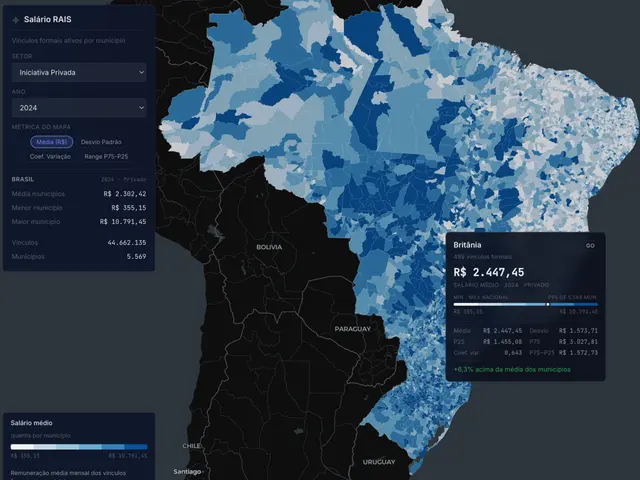
The site was written in Portuguese first: it's a project about Brazil, sourced from Brazilian public institutions (RAIS, SIM, TSE, CGU, IBGE, INEP, CNES, and others), extended with independently-scraped sources that fill the remaining gaps (sanctions lists, SICAF, SINAN Violência, consumer complaints), aimed first at Brazilian readers, researchers, and journalists. This page is a short English summary with direct links into full English translations of all 43 thematic essays — each one pairs a data-driven narrative with the tables behind it; the original pt-br essays remain available from each page's language switcher.
Each essay covers one domain — racial inequality, education, health, labor, politics, crime, the economy, the environment, public budgets, and more — built from linked microdata across ministries and public agencies. Findings are stated directly, with the supporting numbers shown alongside, in the tradition of data journalism rather than hedged academic writing.
The 43 themes
Even within the same occupation, Black workers earn on average 23% less than white workers.
02A Black student at a public school scores 160 points lower on SAEB than a white student at a private school.
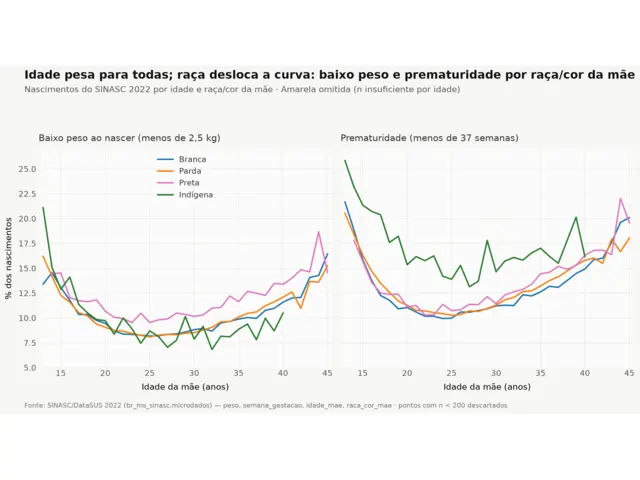
03Mixed-race mothers are operated on in 66% of births, nearly three times the WHO-recommended rate.
04Bankers earn ten times more than teachers, and more than 5 million formal employment records sit locked at the 99-minimum-wage pay cap.
05Only 4.4% of federal representatives are women, and a third of congressional candidates are lawyers or business owners.
06A Black man between 15 and 29 has eight times the chance of dying from police intervention than a white man the same age.
07Five percent of rural producers capture 70% of all agricultural credit in the country, and three states concentrate more than half of national GDP.
08Bolsa Família reaches all 5,570 municipalities in the country, but pays an average of R$ 190 per benefit.
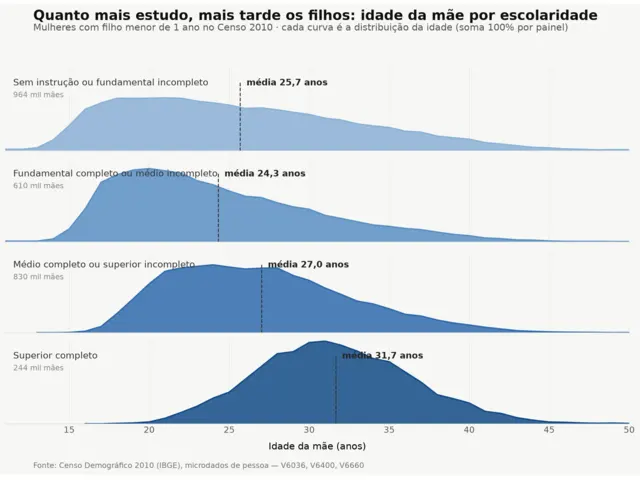
09143,583 children had children in Brazil in a single year.
10Over 70% of Brazilian emissions come from farmland.
11In Brazil's North, only 10% of sewage is collected.
12Black women hold just 3% of the formal labor market's top positions.
13São Paulo alone absorbs more net migration than all other Brazilian states combined.
14Poor families spend 45% of their income on food versus 20% for the rich.
15The average federal congressman has one hundred times the wealth of the voter who elected him.
16Companies pay five times more Income Tax than individuals.
17One percent of rural properties concentrate half of all Brazil's agricultural land.
18Half of what Brazil exports leaves with no processing at all, 30% of the total depends on a single buyer, and 60% of the flow moves through prices fixed inside multinationals.
19Brazilians pay up to ten times more interest than Mexicans, and five companies alone account for nearly half of the Ibovespa.
20Brazil invests less than a third of what South Korea invests in research, concentrates 70% of scholarships in the Southeast, and leaves 85% of patents in foreign hands.
21More than half of the budget authorized by Congress never becomes real spending, and three parliamentary committees alone concentrate R$ 30 billion in earmarks.
22The Amazon has already warmed 1.2°C, but it was the Cerrado.
23In 2021, COVID-19 alone killed more than all external causes combined, and Indigenous people still live 11 years less than White people.
24The North of the country has a third of the hospital beds and less than half the doctors per capita of the Southeast.
25The federal government spends twenty times more on debt interest than on Bolsa Família, and R$ 40 billion in earmarks went out with no identified recipient.
26A diplomat earns five times more than a public-school teacher, and four names in Congress alone control R$ 30 billion in parliamentary earmarks.
27Polls show health as the population's top priority, and more than half of all earmarked spending goes there.
28Students who feel unsafe at school score 15% lower in math.
29Candidates facing administrative-misconduct lawsuits get elected at a 40% rate.
300.1% of Brazilian companies concentrate 80% of all registered share capital in the country, and a large company bills twenty times more per worker than a microbusiness.
31Being born Black in Brazil raises the social-vulnerability index by 30%.
32Schools receive, in practice, only 30 to 40% of the internet speed they contracted for.
33Brazil is the world's second most unequal country, behind only South Africa.
34Brazil formally protects 25% of its own territory in conservation units and Indigenous lands.
35Dormitory towns on the metro periphery have the worst commute times in the country, and the share of Black victims in traffic accidents more than doubled in 20 years.
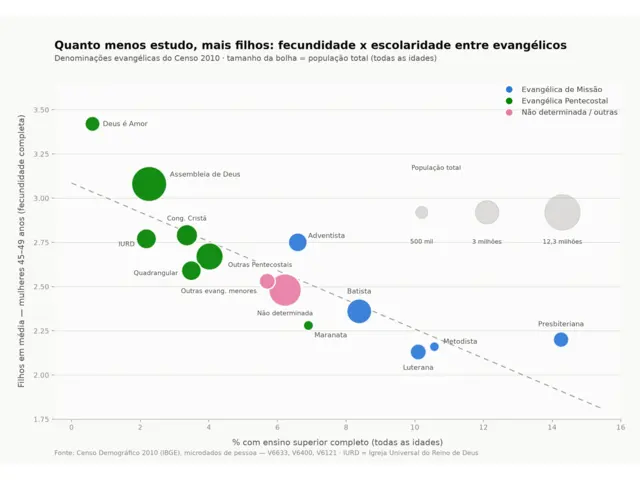
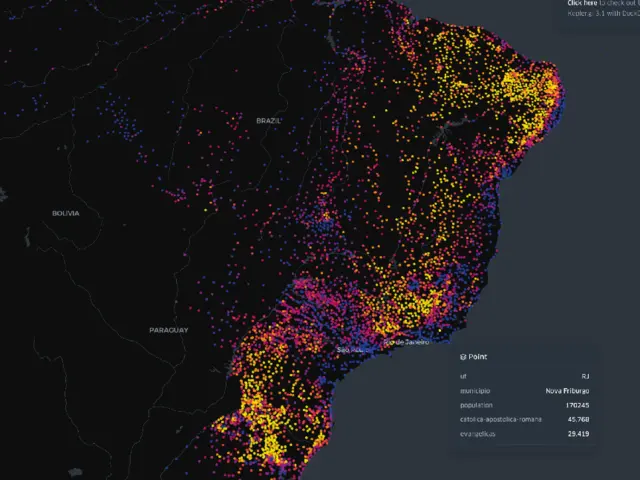
36One Catholic church per 1,005 faithful; one Evangelical temple per 138.
37Brazil has 957,885 suppliers cleared to sell to the state and just 93 companies formally barred by the federal audit court.
38Brazil's richest quartile of students scores 425 in PISA mathematics.
3992% of everything Brazil's state courts spend goes to personnel.
40Santa Catarina's fiscal management scores 2.4 times better than Sergipe's.
41Prescription-only medicines cost three times more than over-the-counter ones.
42Brazil has 7,676 species threatened with extinction.
43Brazil has won 150 Olympic medals in its entire history.